
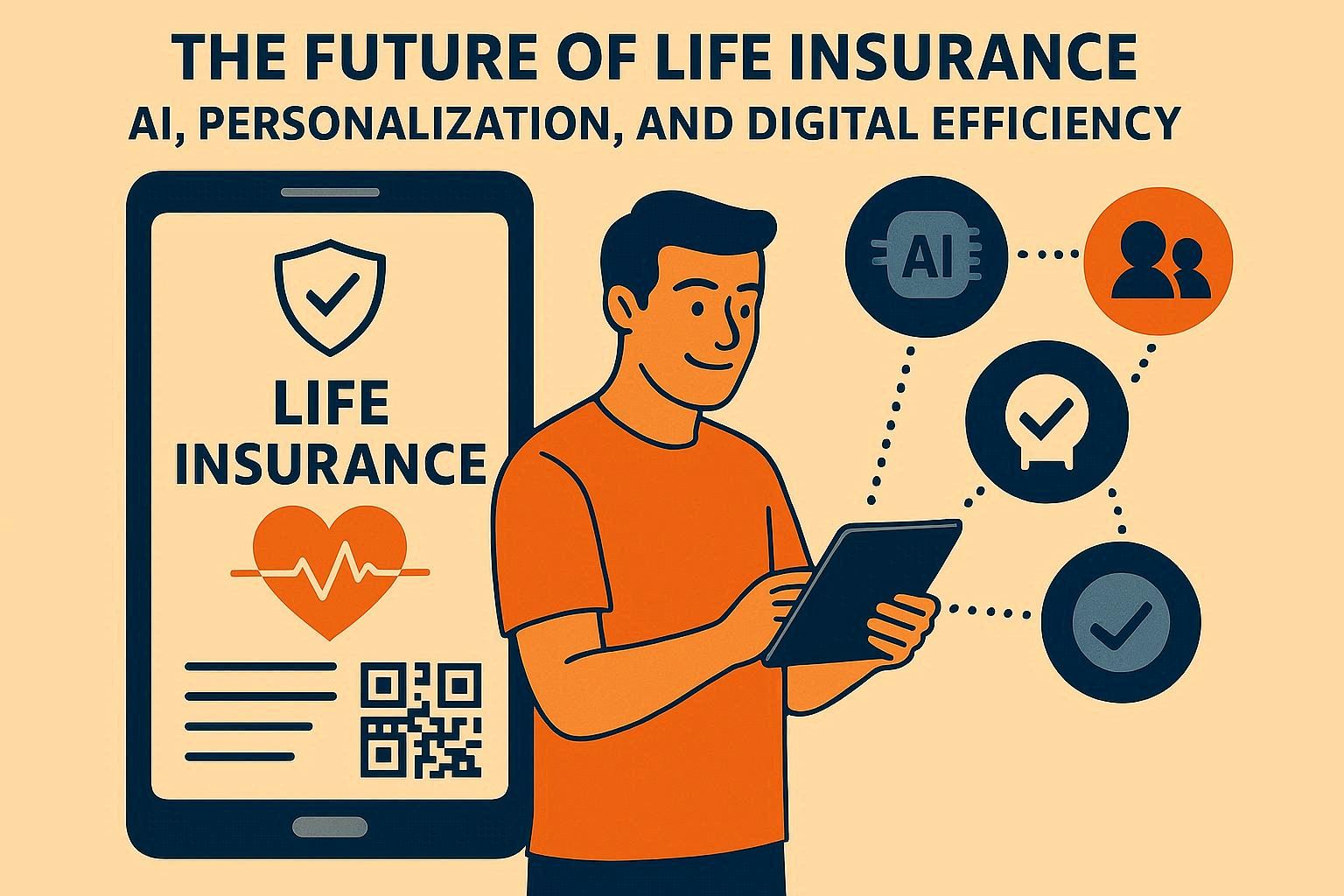
Life insurance is entering a new digital era, driven by artificial intelligence (AI), data analytics, blockchain, and wearable technology. Traditional life insurance has long been associated with complex policies, long underwriting processes, and limited personalization. However, modern InsurTech innovations are transforming life insurance into a faster, more transparent, and customer-centric experience.
This article explores how AI, automation, digital platforms, and real-time health data are shaping the future of life insurance and offering policyholders more personalized and affordable plans.
The Digital Transformation of Life Insurance
Digital platforms have made life insurance more accessible and user-friendly. Customers can now compare policies, calculate premiums, and apply for coverage directly from their smartphones, without visiting agents or offices.
- Instant policy applications and approvals.
- Digital premium calculators and plan comparisons.
- Secure online contract signing through e-signatures.
- Automated customer support via chatbots and AI virtual assistants.
- Mobile-based claims submission and real-time tracking.
AI-Powered Underwriting
Artificial Intelligence has modernized the underwriting process by analyzing vast amounts of data, from medical records to lifestyle habits, making underwriting faster, more accurate, and personalized.
AI-driven underwriting benefits include:
- Automated Risk Assessment: AI analyzes health and lifestyle data to determine risk levels.
- Faster Policy Approval: Applications can be approved within hours rather than weeks.
- Personalized Premiums: Premiums are based on real-time health metrics rather than general statistics.
- Fraud Detection: AI detects inconsistencies and prevents policy misuse.
Wearable Devices and Real-Time Health Monitoring
Wearable technology, such as smartwatches and fitness trackers, plays a major role in transforming life insurance. These devices collect real-time data on physical activity, heart rate, sleep quality, and stress levels.
Insurers use this data to offer:
- Discounted premiums for healthy lifestyle habits.
- Rewards and cashback for fitness achievements.
- Health coaching and personalized wellness programs.
- Early disease detection and preventive care strategies.
Blockchain for Transparency and Trust
Blockchain technology helps simplify claims management and improve transparency in life insurance. Smart contracts automatically verify claims and initiate payouts once the required conditions are met, reducing delays and human errors.
Benefits of blockchain in life insurance:
- Immutable and secure health records.
- Automated smart contract-based payouts.
- Improved data privacy for users.
- Transparent policy agreements and transactions.
How Life Insurance Is Becoming More Personalized
The era of one-size-fits-all life insurance is ending. With AI, predictive analytics, and health data, insurers can now offer customized plans fit for different lifestyles, health conditions, and financial needs.
Types of personalized life insurance:
- Lifestyle-Based Plans: Discounts for individuals with active and healthy habits.
- Family Protection Plans: Tailored coverage for parents and dependents.
- Senior Care Plans: Customized policies for age-related health conditions.
- Smart Term Plans: Flexible premiums based on changing life events.
Customer Experience and Digital Insurance Platforms
Digital insurance platforms are redefining the customer experience by offering paperless onboarding, automated advice, and easy claim submissions. Customers no longer need to depend on in-person consultations or long phone calls.
Key digital services in modern life insurance:
- AI chatbots for policy support and claims guidance.
- Online premium payment and subscription management.
- Digital policy storage through mobile apps.
- Instant renewal and upgrade options.
Challenges and Ethical Considerations
While digital life insurance offers significant advantages, it also presents challenges related to data privacy, cybersecurity, and regulatory compliance. With increasing use of AI and personal health data, ensuring ethical and transparent data handling is crucial.
Major challenges include:
- Protection of sensitive health and biometric data.
- Bias risks in AI-driven policy decisions.
- Regulatory compliance across international markets.
- Balancing automation with human empathy.
The Future of Life Insurance
Within the next decade, life insurance will evolve into a predictive, preventive, and AI-driven service model. Instead of merely offering financial protection, life insurance will focus on helping individuals live healthier and longer.
Future trends include:
- AI-generated digital insurance advisors.
- Metaverse-based virtual insurance consultations.
- Smart contracts for instant payouts.
- DNA-based predictive life insurance plans.
- Cross-border digital life insurance platforms.
Life insurance is moving beyond traditional paper-based systems to become digital, automated, and deeply personalized. With the integration of AI, blockchain, wearable technology, and data-driven insights, insurers are reshaping how policies are designed, managed, and delivered. The future of life insurance lies in improving not just financial security, but also overall quality of life through proactive health management and smart coverage solutions.
In this new era, life insurance will not just protect lives—it will enhance them.