
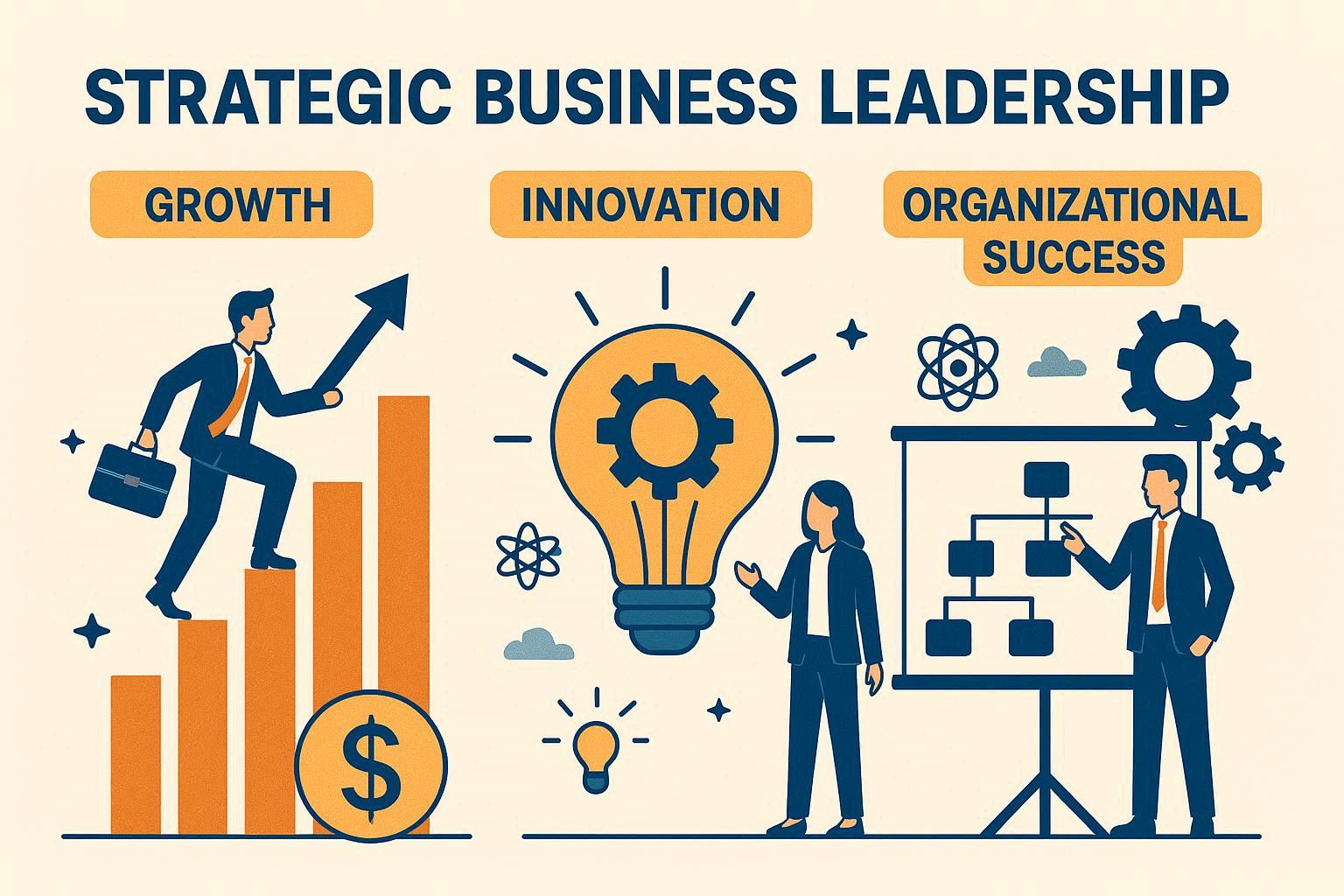
Business leadership is more than just managing a company—it is about shaping its direction, motivating employees, fostering innovation, and ensuring long-term sustainability. In today’s fast-changing economic environment, strategic leadership plays a vital role in helping organizations adapt to technological advancements, market shifts, and global competition. Effective leaders inspire teams, drive innovation, and maintain a strong organizational culture while making decisions that ensure business growth and resilience.
This article explores how strategic leadership contributes to organizational success, focusing on digital transformation, employee engagement, innovation, decision-making, adaptation, and long-term vision.
The Role of Strategic Leadership in Modern Business
Strategic leadership involves planning for the future, understanding market dynamics, and implementing strategies that promote growth and sustainability. Unlike traditional leadership that focuses mainly on operational tasks, strategic leadership emphasizes vision, innovation, and long-term value creation.
Key responsibilities of strategic leaders include:
- Aligning company goals with market opportunities.
- Building a strong organizational culture.
- Promoting innovation and continuous improvement.
- Managing risks and ensuring resilience.
- Empowering employees and building future leaders.
Decision-Making and Risk Management
Effective business leadership depends heavily on decision-making. Leaders must assess risks, analyze data, and make informed choices that influence the company’s future. Poor decisions can lead to financial losses, reputational damage, or even business failure.
Key decision-making strategies include:
- Data-Driven Decisions: Using analytics and market research to guide strategy.
- Scenario Planning: Preparing for best-case and worst-case outcomes.
- Risk Assessment: Identifying and mitigating potential threats.
- Agile Decision-Making: Adapting quickly in uncertain situations.
Digital Transformation and Leadership
Digital transformation is reshaping business operations. Leaders must understand how technologies such as AI, cloud computing, automation, and data analytics can improve performance, reduce operational costs, and enhance customer satisfaction.
How leaders drive digital transformation:
- Encouraging digital innovation across departments.
- Investing in technology training for employees.
- Adopting digital tools for collaboration and productivity.
- Leading organizational change during digital transitions.
Driving Innovation in Business
Innovation is the lifeblood of successful businesses. Leaders must create a culture where new ideas are valued and employees are encouraged to explore innovative solutions. Companies that embrace innovation are more likely to grow, stay competitive, and meet evolving customer needs.
Ways leaders promote innovation:
- Encouraging creativity and experimentation.
- Implementing continuous improvement strategies.
- Partnering with startups and research organizations.
- Incentivizing employees to propose new ideas.
Leadership and Employee Engagement
High-performing teams require strong leadership and employee engagement. Motivated employees work better, remain more loyal to the organization, and contribute to long-term success.
Leadership practices that improve employee engagement:
- Recognizing achievements and rewarding performance.
- Providing growth and learning opportunities.
- Encouraging open communication and feedback.
- Building trust and promoting work-life balance.
Visionary Leadership for Long-Term Success
Visionary leaders look beyond short-term profits. They focus on building sustainable business models, strengthening brand reputation, and ensuring organizational longevity. Visionary leadership requires foresight, adaptability, and strategic planning.
Elements of visionary leadership:
- Long-term growth strategies.
- Strong ethical business practices.
- Investment in talent and innovation.
- Environmental and social responsibility.
Leading Through Crisis and Change
Crisis leadership has become an essential skill in modern business. Whether dealing with economic recession, technological disruption, or supply chain crises, leaders must act swiftly and strategically to ensure stability.
Key crisis leadership strategies:
- Transparent communication with stakeholders.
- Protecting core business operations.
- Reviewing and adapting business strategies.
- Supporting employees’ mental well-being.
Future Trends in Business Leadership
The future of business leadership will be defined by agility, innovation, ethics, and digital intelligence. Emerging leaders will need strong knowledge of AI, sustainability, global economics, and emotional intelligence.
Future trends include:
- AI-powered decision management.
- Remote and hybrid work leadership models.
- Increased focus on sustainability and ESG compliance.
- Data and analytics-based leadership strategies.
Strategic business leadership is essential for achieving sustainable success in today’s fast-evolving global economy. By combining innovation, digital transformation, employee engagement, and long-term planning, leaders can build resilient, competitive, and future-ready organizations. Businesses that invest in effective leadership development will not only survive market challenges but will thrive and set new benchmarks for success.